
A Drifting Northern Ireland Wants Justice: British Soldier Walks Free After Killings
Over 50 years later, not a single person has been charged for the murder of 14 innocent civilians in Northern Ireland - astonishing for one of the oldest and most sophisticated legal systems in the world.
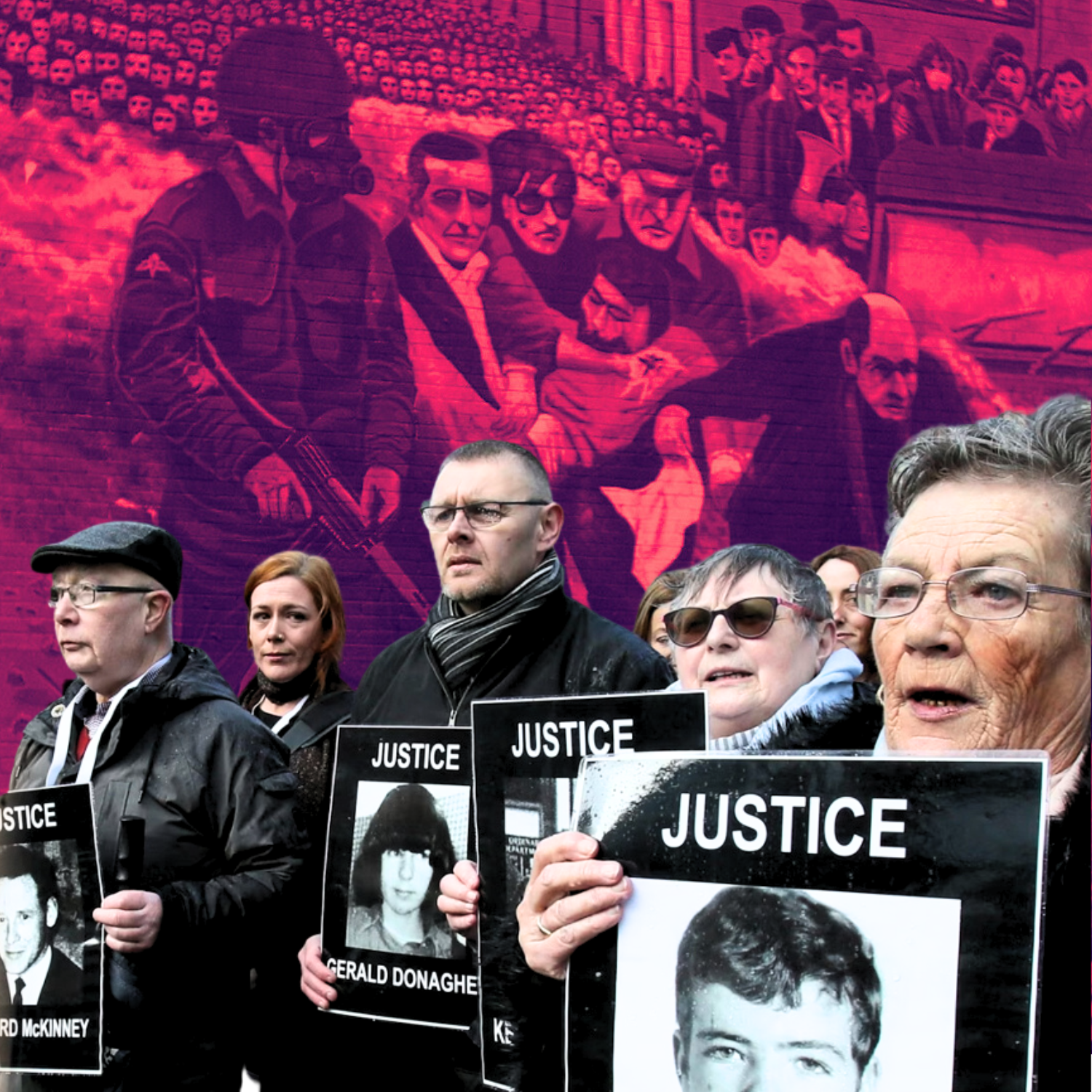
On 30 January 1972, thirteen people were shot dead and at least fifteen others injured at a civil rights demonstration in the Bogside area of Derry. More than fifty years on, not a single British soldier has been found guilty. There has only ever been one trial.
Soldier F, whose anonymity is protected by a court order, faced charges of murdering James Wray, 22, and William McKinney, 26, as well as five charges of attempted murder on 23 October 2025. Soldier F was found not guilty on all charges. The result reenforces the sense that Bloody Sunday represents a grave miscarriage of justice and British cover-up. A solicitor representing some of the Bloody Sunday families, Ciarán Shiels, said Soldier F was "the most protected serial killer in British legal history". "He has enjoyed every comfort that a victim should enjoy," he added.
“the most protected serial killer in British legal history…”
Previous Trials and Tribunals
The Widgery Tribunal Report (April 1972) was issued by a government-appointed Tribunal inquiring into the events on Sunday, 30 January 1972. Despite the tragic loss of life in connection with the procession in Londonderry, the tribunal, as documented in this report, found that the soldiers’ firing was “bordering on the reckless” but not criminal. It also documented that some soldiers “may have fired in the belief that they were returning fire” (HC 220, 1972), despite the later Saville inquiry finding this to be misleading.
The end of this lacklustre tribunal marked a period of over 20 years whereby no further official investigation took place; the political motives of the UK government were overtly clear. The government was able to (relatively) successfully cover up the incident during the height of the troubles from excessive scrutiny, helping ensure support for its future actions in Northern Ireland.
The Trial of Soldier F
The judge stated members of the Parachute Regiment had shot unarmed civilians as they ran away, but the evidence against Soldier F had fallen well short of what is required for conviction. This is because the forensic evidence is unclear and eyewitness reports conflict, so it is not possible to pinpoint exactly who fired the shots. Judge Patrick Lynch told Belfast Crown Court that the members of the Parachute Regiment who had entered Glenfada Park North had "totally lost all sense of military discipline".
Soldier F, according to the judgement, had shot "unarmed civilians fleeing from them on the streets of a British city". "Those responsible should hang their heads in shame," the judge said. Soldier F was tried in a British court, specifically the Belfast Crown Court in Northern Ireland. The trial took place without a jury due to the highly politically charged nature of the trial and to protect the individual’s identity, with verdicts delivered by Judge Patrick Lynch. The judge found that, given the passage of over 50 years, conflicting testimonies, and the loss of direct forensic links, the evidence simply could not prove beyond reasonable doubt that Soldier F himself fired the specific shots that killed or wounded the victims.
To explain it simply, a criminal conviction requires proof beyond reasonable doubt that:
The accused (Soldier F, personally) fired the fatal or injurious shots, and;
He did so intentionally or recklessly, knowing the victims were unarmed and non-threatening.
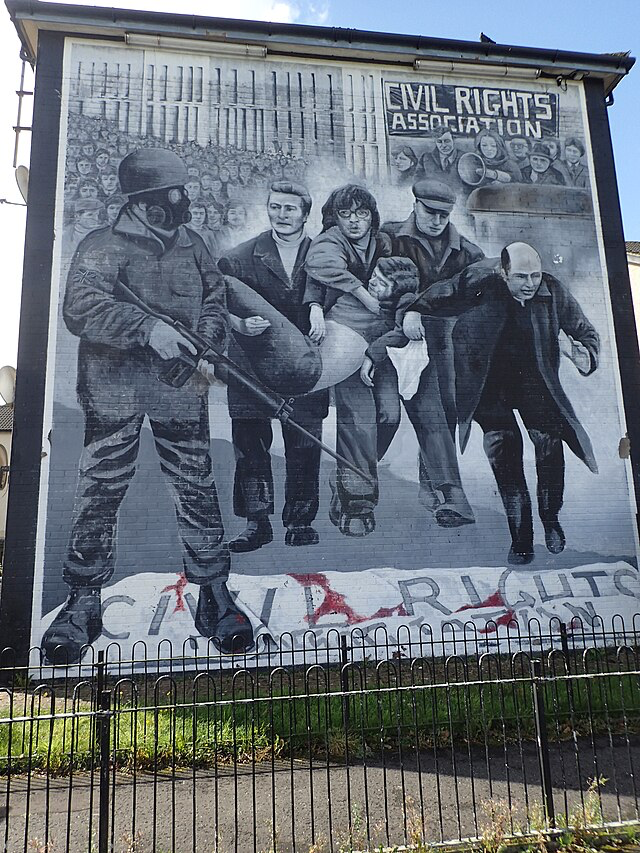
Bloody Sunday Mural in Derry, via Wikimedia Commons
A Divisive Moment for Northern Irish Politics.
The Troubles now ruminate in Northern Ireland’s painful and tragic past, but the region is shifting politically: 2024 was a year of records. This year marked the first time that Sinn Féin won the most seats in the UK general election. 2024 was also the first time the First Minister of Northern Ireland came from Sinn Féin - that being Michelle O’Neill. Kneecap, the band, has gained wide-scale popularity and support the unification of Ireland. They have promoted the use of Irish Gaelic and speak out against the British owning the six counties of Northern Ireland. A survey by ARINS Project found that support for a “Yes” vote for Irish unity in Northern Ireland stood at 34% in 2024, up from 27% in 2022.
Indeed, nationalist diaspora and sympathisers in Scotland represented their frustration at the outcome of the trial quite clearly. A banner displayed by supporters of Celtic FC read, “A coward walks free from the dock – there is no British justice.” Other notable reactions include Michelle O’Neill (the aforementioned First Minister of Northern Ireland), who called the verdict “deeply disappointing,” saying that “not one British soldier … has ever been held to account.”. Such damning language by such a notable figure represents the divide this outcome has had on Northern Irish politics.

Michelle O’Neill, First Minister of Northern Ireland who spoke out against the trial’s ‘Not Guilty’ verdict, via Wikimedia Commons
In sum, the outcome of the Trial of Soldier F only reinforces the hostility felt by many in Northern Ireland towards the British state and British institutions. It could also further Irish nationalism, the support for the unification of the Republic of Ireland and Northern Ireland, although this is difficult to measure and not a guarantee. It is unlikely that this trial will singlehandedly kickstart any major constitutional developments in Northern Ireland due to its historical and political connections with the UK, yet it may serve as yet another landmark case for those who support the unification of Ireland.