How The Cambridge Union Legitimises the Far-Right
Drunk on the naivety of one's first steps into Cambridge, I was enthused by everything this university town has to offer. The Cambridge Union was particularly sparkly, a debating society which promises to challenge convention and promote innovative ways of thinking; an organisation that prioritises free speech whilst ultimately upholding the pillars of ethical and fair debating. This was the society which I was drawn towards.
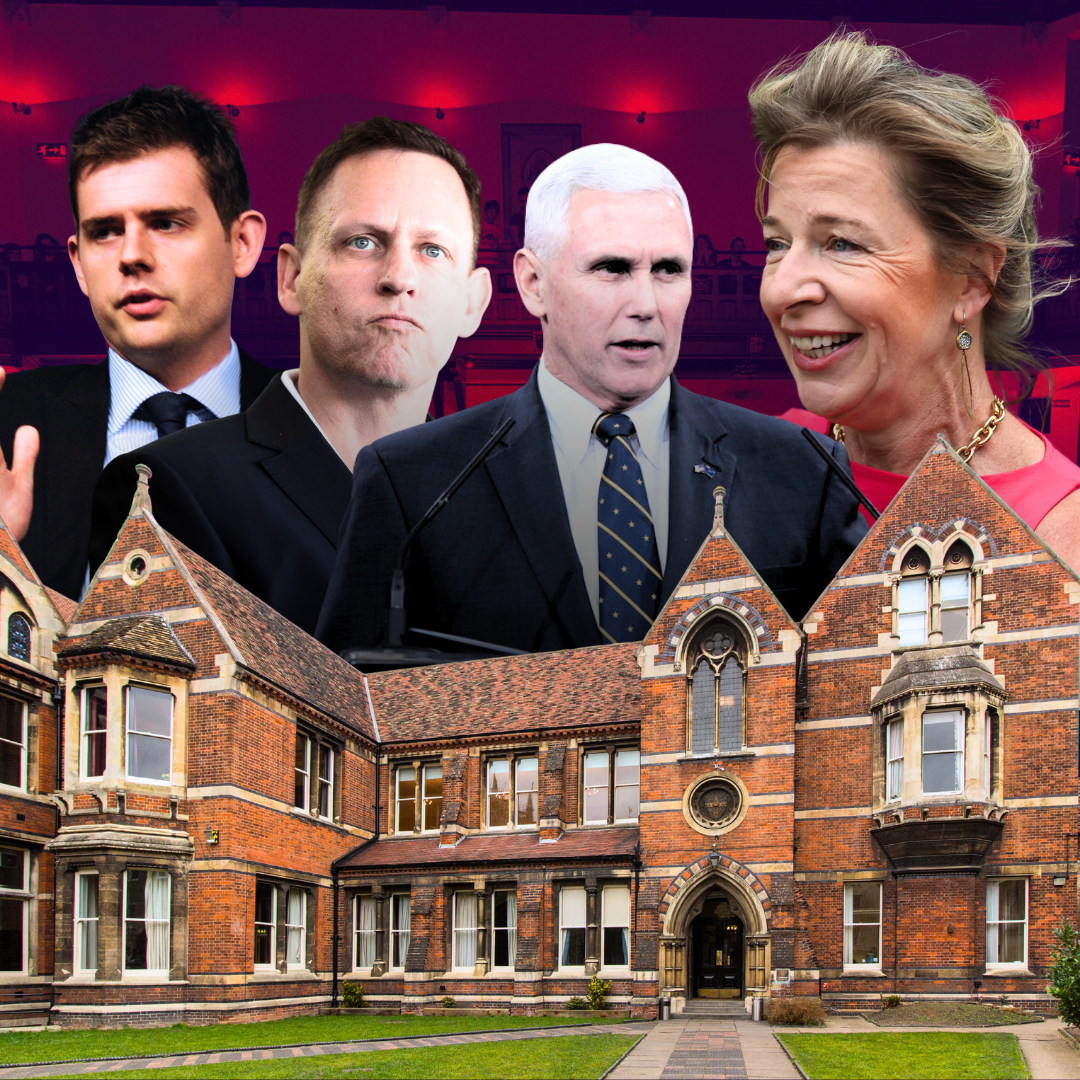
Matthew Goodwin / Chatham House; Peter Theil / Gage Skidmore; Mike Pence / Gage Skidmore; Katie Hopkins / Owain Davis
The Baldwin-Buckley debate was plastered along the Michaelmas term card, an event which propelled the Union’s legacy onto an international stage. Baldwin’s powerful 1965 speech critiquing white supremacy won with an overwhelming majority of 380 – even being publicised by The New York Times. The impact of this debate, then, was something that felt aspirational—that the union facilitates tangible, progressive change was the main takeaway from the period. I felt I had found my place within an institution which pursued the traditional values of freedom of speech and integrity --- but this was a naïve assumption.
When I heard Mike Pence was visiting the Union, I was equally disgusted as intrigued. A man at the heart of Donald Trump’s first presidency, a man whose politics had enabled far-right extremism and the rise of fascism in the U.S.A. How would allowing this man to legitimise the impact of his career be something beneficial for the world? This event was when my illusion of the Union as an instrument for change began to fracture. Pence’s speaker event was punctuated by the sounds of protests outside, chants of “FREE FREE PALESTINE!” outside of the red-brick walls of the building; calls for Palestinian liberation against Israel’s ongoing genocide. I came to the sharp realisation that I was on the wrong side of the wall.
“I came to the sharp realisation that I was on the wrong side of the wall.”
Pence spoke openly about Israel’s right to self-defence, self-preservation and the country’s identity and this centredness around Israeli national identity. He argued that in guaranteeing Israel’s continuity, there was justification for state killings of civilian men, women and children: “And I strongly supported the United States standing with Israel while Israel hunted down and destroyed Hamas and I believe that we must continue to stand with Israel for her peace and security.”
Whilst Pence does state that he thinks Israel’s peace is not exclusive from the peace in the region, his comments regarding Israel’s right to self-determination ignore how Israel’s destruction of Hamas has not occurred in isolated events: the UN has declared Israel’s actions in Gaza to be war crimes due to the bombings of schools and hospitals unrelated to Hamas. Voices like Mike Pence do not need the Cambridge Union to be heard; they are already amplified on a global stage and are more likely to benefit student committees via polemical publicity.
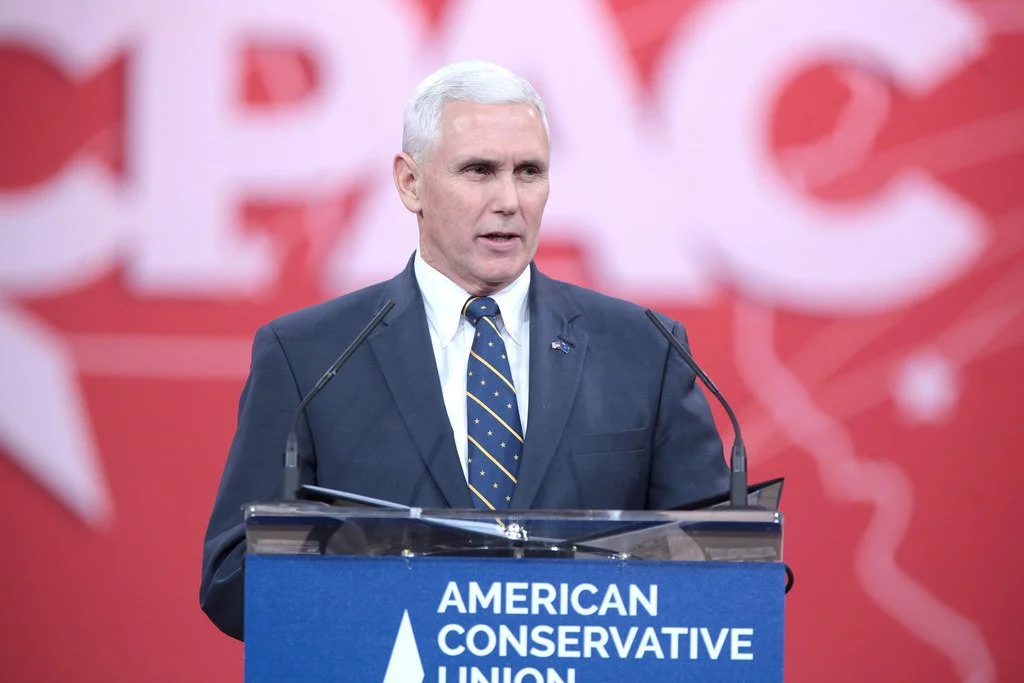
Governor Mike Pence of Indiana speaking at the 2015 Conservative Political Action Conference (CPAC) / Gage Skidmore
“Voices like Mike Pence do not need the Cambridge Union to be heard; they are already amplified on a global stage and are more likely to benefit student committees via polemical publicity.”
I had not fully turned my back on the union when I came back in Lent—I was deeply apprehensive, but not hostile to the debating committee. It was the term card which hit the final nail in the coffin for me. The first debate of the term was characteristic of an institution actively pursuing publicity over ethical debate filled with motions deliberately constructed to incite inflammatory rhetoric instead of the Cambridge Union’s ethos: the pursuit of intellectual discussion.
The January 22nd debate perhaps characterises this perfectly. The motion itself “This House Believes The Time Has Come For A Radical British Left” was incompatible with the speakers in the front row. The far-right filled up the opposition: reactionary Matthew Goodwin - neoliberal academic turned GB news pundit and current Reform candidate; an undergraduate economics student called Diti Shah, and self-proclaimed “friend of Farage” Councillor Alan Mendoza. The ‘radical-left’ proposition, on the other hand, fell short of this designation. Andrew Feinstein, while a progressive figure who once worked in Mandela’s government, is not a Marxist as was implied. The same can be said for moderates Elliot Tong, the Green Party’s Spokesperson for Democracy, and Matt Kennard, an award-winning journalist.
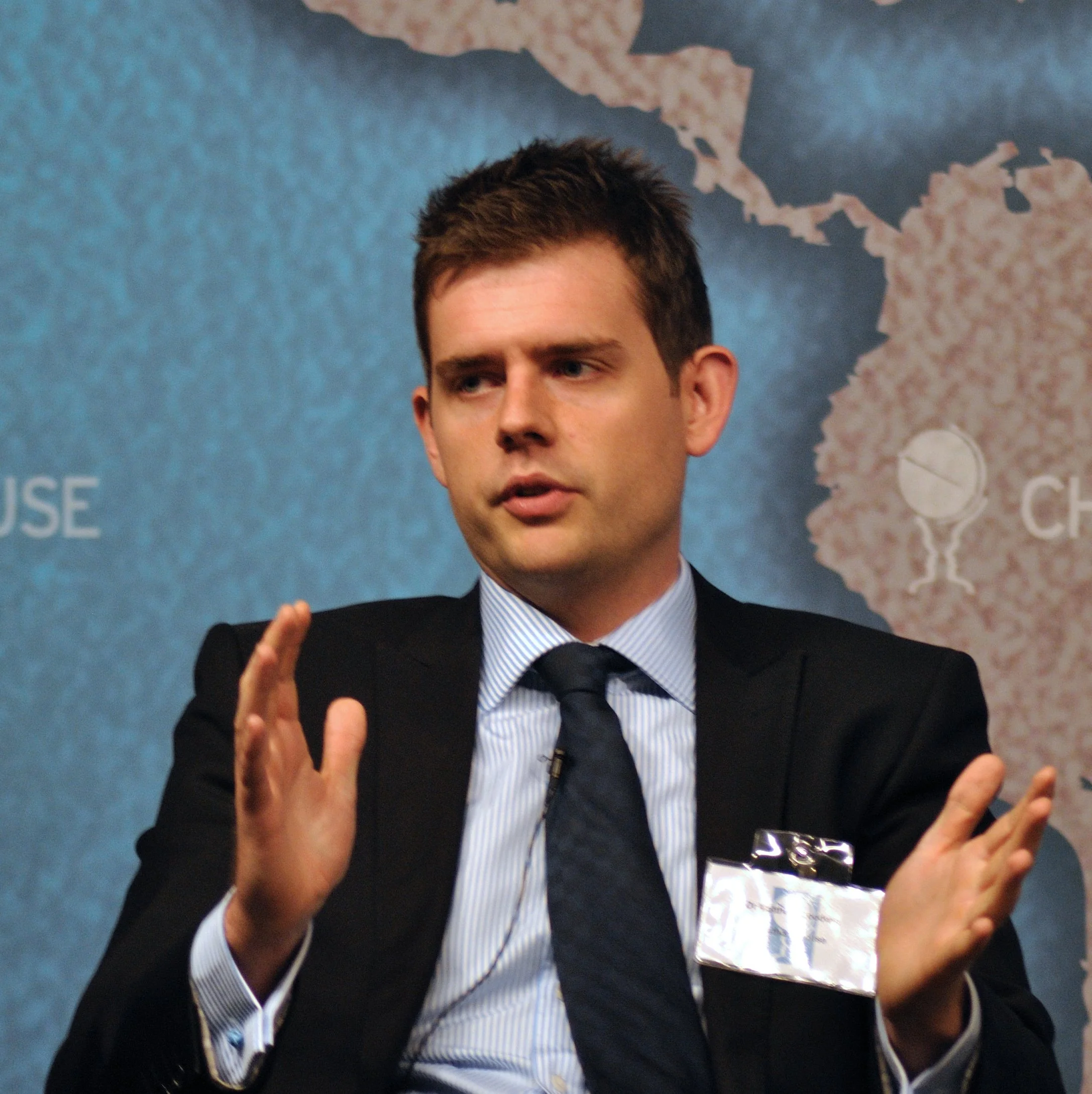
Dr Matthew Goodwin, Reform UK candidate / Chatham House
The chasm between the centre-left wing on the proposition and far-right nationalism on the opposition demonstrates the sheer audacity of the Cambridge Union as an institution that clearly incites inflammatory politics in favour of clickbait rather than thoughtful debate, which can inspire progressive action. Furthermore, the decision to platform Matthew Goodwin, at the turning point in the Gorton and Denton byelection in Greater Manchester, granted him exposure and legitimised him as a contender for parliament—rather than the right-wing grifter he is. And it must be asked: what were the Union’s intentions in platforming Goodwin? The coincidence of his election and appearance at the Union mix uneasily in my recollection of the event. By inviting Goodwin, the Union is simultaneously minimising its legitimisation of right-wing politics, whilst also inflaming divisions in British politics to gain media attention, all the while remaining laissez-faire to how debate transforms political discourse. One fifteen-second TikTok of Goodwin going viral at the Union could influence the opinion of the electorate in the constituency, as without radical left-wing opposition, Goodwin’s extremism remains unchecked.
“The coincidence of his election and appearance at the Union mix uneasily in my recollection of the event.”
The Cambridge Union became a pantomime of rhetoric which dissipated as soon as the debate was over—the impassioned energy present in the chamber became light-hearted chatter amidst the clink of glasses in the bar. My anger, which felt so obvious, was misplaced amidst the networking and congratulations and thus cemented for me that the purpose of the union’s debate is merely entertainment and spectacle. Moreover, it has become apparent that the union relies on tokenistic schemes such as the access membership to highlight its commitment to diversity--but will not seek to protect you from the hateful rhetoric inside.
But really, what did I expect from this institution, which was founded in exclusivity, and continues to be inaccessible financially and emotionally for many students across the university? From Churchill to Charlie Kirk, the Union has committed itself to inviting voices which dominate the political sphere, and thus, it lacks the nuanced conversations which healthy debate requires to generate change. As per the invitation for Katie Hopkins to speak just last week – Hopkins’ is a known racist and far-right peddler, and her version of offending is vastly out of the realms of ethical speech that the Union states it will uphold. Having described UK migrants as ‘cockroaches’, alongside calling on live television for the removal of all Palestinians from Israel, the Union is dancing along the boundary between free and fair speech. Why are our institutions performing by the right-wing playbook of divisive motions and headlines?
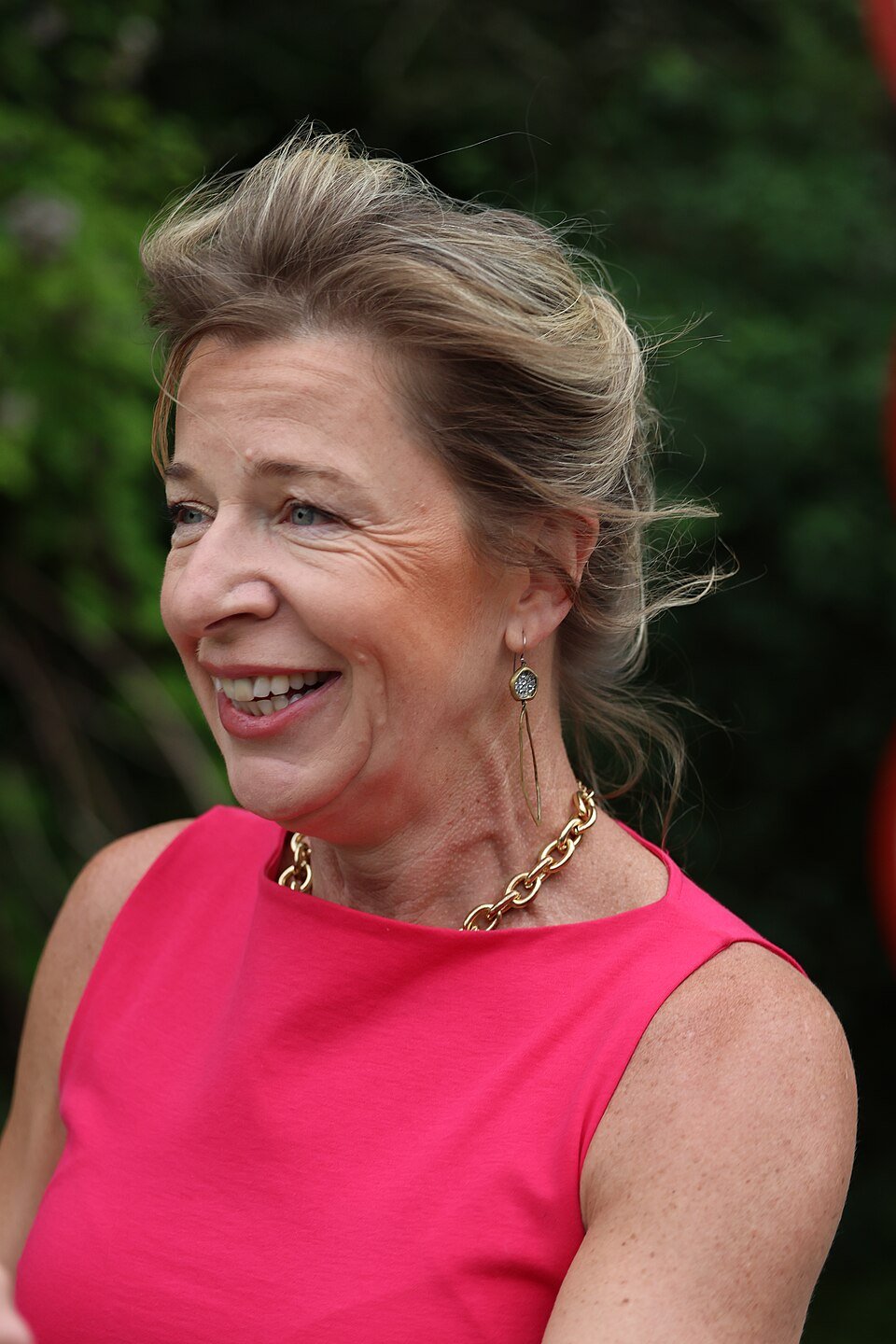
Katie Hopkins at Reform rally, Newton Abbot / Owain Davis
This critique is not an argument against free speech, nor against the presence of political disagreement within the Union’s chamber. Free speech, however, does not exist in a vacuum and the act of performing it not politically neutral. When an institution as historically and culturally powerful as the Cambridge Union invites speakers, it does not merely provide a space for ideas to be shared—it gives ideas credibility and visibility. And when these ideas are polarising, divisive, and hateful, it gives the chamber a reactionary boost of popularity. We must ask the question: to what extent does a valorisation of ‘free-speech’ inspire student committees to invite the far-right, or does the attractive proposition of polemic notoriety and fame overpower committee consideration entirely?
“To what extent does a valorisation of ‘free-speech’ inspire student committees to invite the far-right, or does the attractive proposition of polemic notoriety and fame overpower committee consideration entirely?”
And so, I find myself thinking back to the debate motion of the Baldwin-Buckley debate and how this affected positive change on American politics. The Union has an established precedent of enabling change to happen, yet the push for increasingly antagonistic debate motions and far-right figures feels intentionally manufactured for the pure sake of publicity. It seems to be constantly chasing the high of Charlie Kirk’s debate, which gave the Union recognition it had not seen for several years. But despite this publicity, we must recognise that allowing the far-right to dominate the chamber is deleterious to free speech and intellectual discussions.
By not inviting actual left-wing voices to the radical British left debate, the Union effectively silenced political commentators whose voices may criticise the institution of the Union, such as renowned Marxist Ash Sakar or journalists of Novara Media who push against the far-right continuously. This fear of challenge exposes the Union’s vulnerabilities. Finally, if the Union continues to dilute the principles of debate and descend into a warped, highly polarising version of discussion, then it should be prepared for its reputation to be similarly damaged on the global stage.