
The British Right Wants the ECHR Dead. A Human Rights Scholar Says the Debate is Distorted
This interview was an episode recorded by the Declarations Podcast - run from the Cambridge Centre for Governance and Human Rights: feel free to listen here.
In its 75th anniversary year, the European Convention of Human Rights (ECHR) has become a major point of contention in British politics. Kemi Badenoch has announced that the Conservative Party would immediately withdraw from the Convention and Reform’s Zia Yusuf describes leaving as a precondition for recovering ‘sovereignty’.
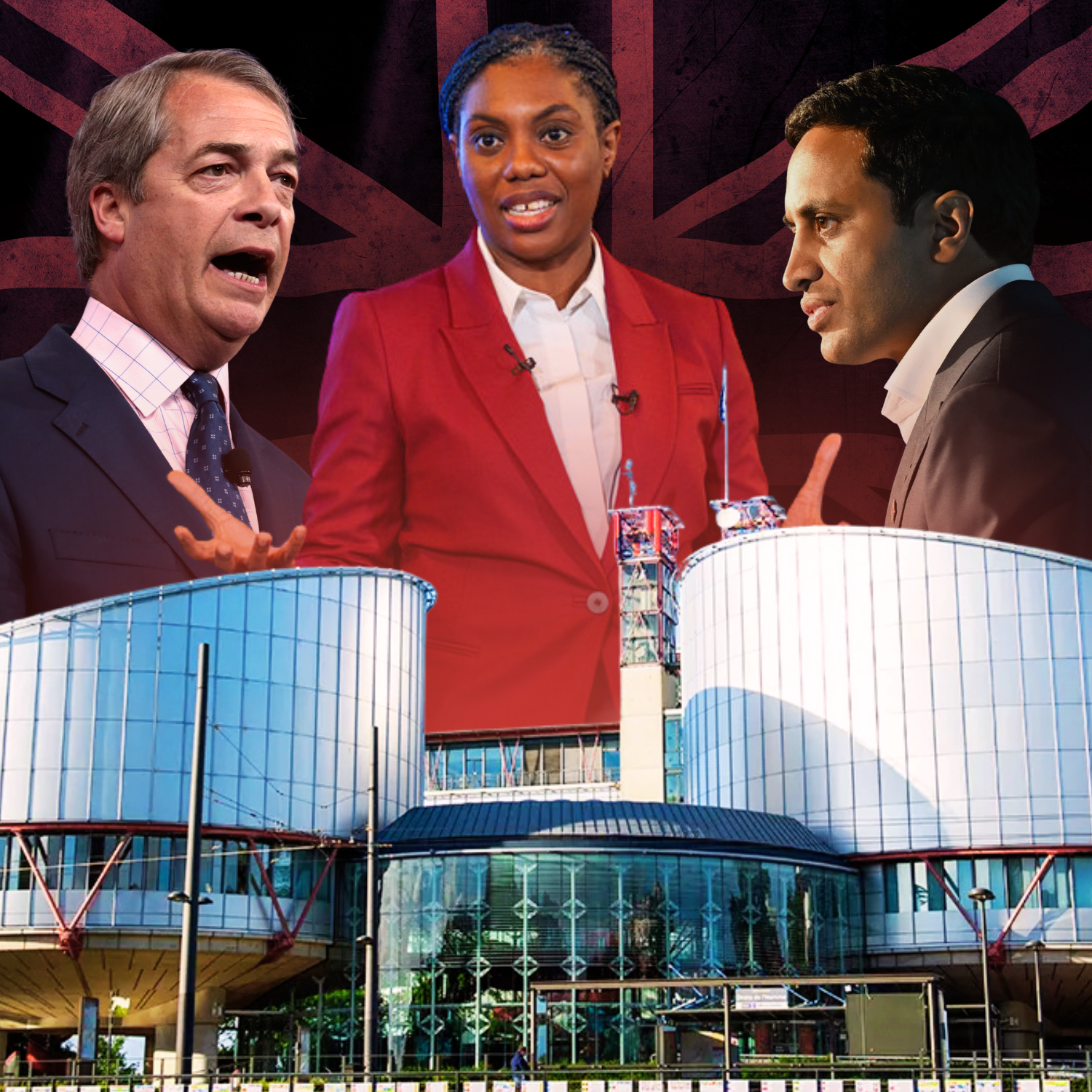
This is not a position limited to the far right. Whilst Home Secretary Mahmood has stepped back from her early courtship with anti-ECHR rhetoric, significant factions within the Labour Party continue to advocate for a British bill of rights. Labour MP Graham Stringer recently made this case in a chamber debate at the Cambridge Union.
What is striking about much of this discourse is the simplicity of its terms; simplification that is a familiar facet of isolationist discourse. Politicians like Yusuf take for granted that there is a zero-sum relationship between British sovereignty and our involvement in international organisations. This is an argument for reduced accountability to internationally recognised standards, but one that doesn’t seriously reckon with how international institutions function.
As an MPhil candidate in Politics and International Studies, specialising in Human Rights in multilateral operations, I certainly don’t have a romanticised view of Human Rights bureaucracy. There is a substantial critique that we ought to take seriously. However, an overly simplified version of this conversation doesn’t reckon with the ECHR as a complex and dynamic component of British politics. It creates a scapegoat.
In compelling contrast to this discourse, I recently had the privilege of interviewing Professor Jessica Greenberg of the University of Illinois. Working around a substantial time difference and Professor Greenberg’s hectic conference schedule, we sat down over Teams to record an episode for the Declarations Podcast - a podcast run from the Cambridge Centre for Governance and Human Rights. This episode was occasioned by the recent publication of her new book: Justice in the Balance: Democracy, Rule of Law and the European Court of Human Rights.

Courtesy of Professor Greenberg
Professor Greenberg is keen to make a key intervention: the ECHR is a deeply complex social institution. She argues that the European Court of Human Rights, at its most effective, is a “global problem space” which can construct generative new responses to crises. The court changes through the ongoing process of social construction, a process one must take seriously before passing judgment on the institution. I went into our conversation having closely observed the rise in isolationist arguments predicated on simplification, and Greenberg is clearly presenting something different.
Greenberg proceeds from the belief that the world is better for having the ECHR in it and highlights something of a self-fulfilling prophecy in its functioning. However, neither Greenberg’s work nor this article should be read as an explicit case for the ECHR, but rather an attempt to understand the depth of its social complexity.
After exchanging pleasantries and navigating the usual technical difficulties, I begin by asking Professor Greenberg what drew her to study the ECHR. She responds with what she self-deprecatingly calls a “very potted history.” As Greenberg explains, the ECHR has a fascinating history, invaluable to understanding the modern institution.
12 European states signed the European Convention of Human Rights (ECHR) in Rome in November 1950. Professor Greenberg emphasises that this was framed as a direct response to the major conflicts of the first half of the 20th century and is a written commitment to abiding by the Universal Declaration of Human Rights on European soil. The European Court of Human Rights (ECtHR or ‘the court’) was established by the signatories to provide institutional backing for the Convention. It is a functioning court based in Strasbourg, with each of the now 46 member states contributing a single judge.
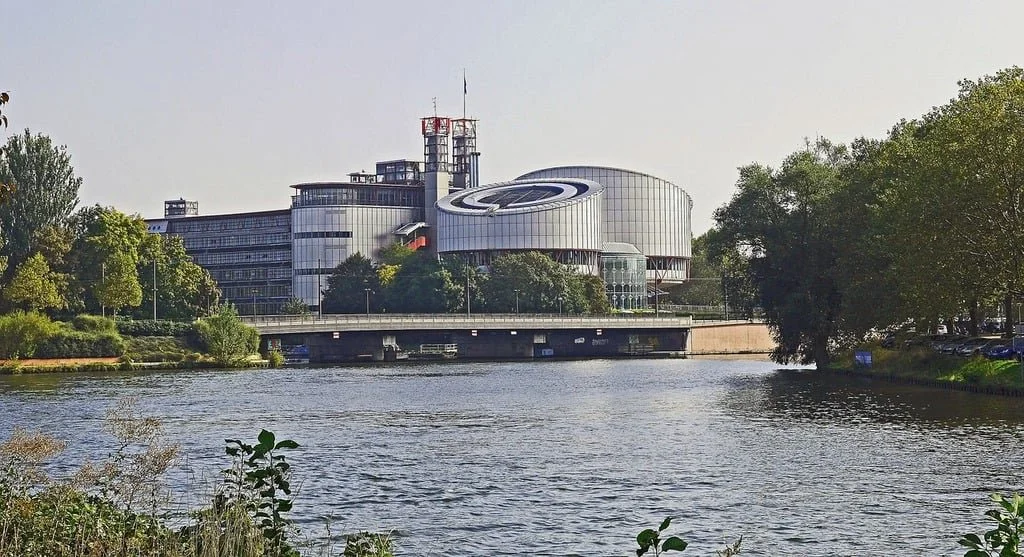
The European Court of Human Rights
These two acronyms, often used interchangeably, represent the fundamental duality of the ECHR system. On the one hand, it is a symbolic commitment to abstract principles, which Greenberg describes as the “conscience of Europe.” On the other hand, it is a physical entity wherein people work to administer law through a “bureaucratic machine.”
Professor Greenberg tells me that whilst she is interested in the system as a whole, her recent work is focused primarily on the court itself. Her innovation is to study the court as a “bureaucratic machine” of great “social complexity.” For Greenberg, the court should not just be understood by the judgments it outputs, but by a ground-up ethnographic study of the “lives and experiences” that constitute its day-to-day operations. She approaches the construction of legality through the court as a “practice-based achievement,” constantly maintained by its continued “performance.”
In response to a further question about her methodology, Greenberg was keen to stress the interdisciplinary nature of her research. She explained that the serious study of both law and anthropology reveals how performance and contestation maintain the “social fiction” of the “rule of law.”
It is this treatment of the court as a “living instrument”, and thus one capable of change, that defines Greenberg’s analysis. Pursuant to our shared interest in crisis, I asked how this continual contestation relates to concern for the court’s future. She responds that her work is alert to crisis as an idea that has run through the court from its formation in response to World War II. She emphasises how the court has always treated crisis as generative. There have always been plural threats, but threats that, through complex social systems, have provided springboards to new imaginings of legality and governance.
The question then is under what conditions can the ECHR channel a productive response to a crisis? Professor Greenberg suggests that it is predicated on a degree of consensus. A crisis of faith is ”a very different order crisis, existentially, epistemologically, ontologically,” and is ultimately the greatest threat to the court. But when crisis is met by people coming together to think through how international legal cooperation can answer the questions of modernity, the crisis becomes an opportunity for advancement.
When faith in the system is the basis of “political action,” the system is productive. When people disinvest, it goes from a crisis as something “generative” to something profoundly destructive.
The functioning of the court, therefore, is something of a self-fulfilling prophecy for Greenberg. The stakes here are high. As she explained to me, “When suddenly someone decides they're no longer going to play by the rules of the game, the rules of the game are revealed in some ways to be… a social fiction.” That is not to diminish the power of a social fiction, of course, but to show that it is always conditional on continued performance.
The idea that she keeps coming back to in our interview and her book is that of a “leap of faith.” For international organisations to provide generative responses to the polycrisis of Human Rights, there needs to be a discursive community of people prepared to make this leap of faith.
To test the limits of this theorisation, I challenged Professor Greenberg on the relationship of the Court to immigration. As we have seen, the constructed crisis of immigration is the driving force behind the modern politicisation of the ECHR. Reform and the Conservatives have both incorporated anti-ECHR discourse into a broader matrix of isolationism expressed primarily through attacks on immigration. If crisis response is so central to the nature of the court, how can it handle what increasingly appears to be the greatest existential threat to the belief in its ideals, which, according to her analysis, it so centrally relies on?
Professor Greenberg recognised that migration was the greatest concern for those who “want the court to be the best version of itself,” as well as those who attack it. But we were both in relative agreement that its responses to the politics of migration in Europe have tended increasingly towards “procedural guarantees” and away from a meaningful conception of justice.
To think meaningfully about the modern crisis of immigration is to think deeply about neocolonialism and what Greenberg calls “the long tail of colonial violence.” Predictably, the court doesn’t seem ready to be a driving force towards European accountability on this score, and it is hard to conceive of a meaningfully progressive reading of world history being channelled through the court.
In reading Professor Greenberg’s work, I was struggling to see a way past this. If we can’t see a way to push for a constructive reappraisal of the migration crisis through the court, might our membership not be an ultimate force for good? Calls to leave the ECHR are currently driven by the right in British politics, but the response cannot be to defend the status quo of the court.
In response to my more pessimistic questions, Professor Greenberg continually brought me back to the scope for change in the court. The court has changed a great deal since its mid-century formation, and Greenberg does not overly romanticise its history. Her book recognises in its introduction that international legal institutions have “perpetuated racism, colonial legacies, and even plunder.” Greenberg’s conception of consistent social construction is not naïve about the court’s shortcomings, but unlike more static conceptions, Greenberg’s can make sense of how it has continually been able to adapt to historical change. It is this capacity for change that is a source of hope for Professor Greenberg.
The 46 nations of the ECHR are currently working towards a “political declaration” on migration to be announced at the summit next May. This is an example of the court re-evaluating its position in relation to contemporary challenges. It remains to be seen whether this declaration will be a force for good.
As Professor Greenberg kept coming back to the dynamic nature of the court, I pushed further on the mechanism by which change is driven through the court. She turned the conversation to the crucial idea of “Judicialised Agency”. Professor Greenberg says that legal actors “can use institutional affordances, goals, and spaces to work and rework human rights for different collective projects.” Through this mechanism, they can exert influence only facilitated by this legal structure.
I pushed back on the exclusivity of the discursive communities this creates. By relying on the specific and highly specialised legal language of the court, the capacity to bring about change relies on those with the training to use that language. I pointed out that the agency that can be exerted is in many ways constrained by the scope of the language itself. In Greenberg’s language, the constant need for “strategic litigators” to “translate human experience into the language of law and diplomacy” must be seen as a constraint as much as a liberatory force. We can shape the court, but only to the extent possible through the terms of its legalistic premises.
In response, Professor Greenberg was prepared to accept this limitation and defended a more anthropological conception of agency. She argued that there is always an extent to which agency is constricted, as even outside of a legal context, we must always engage with the world through a language that shapes and constrains what we can say and how we can think. In this sense, Greenberg acknowledges that judicialized agency echoes the social theorist Bakhtin, whose theory of language and dialogue was of a framework that was only at best “half our own.” She stressed that there is no “one-to-one relationship” between agency on the one hand, and whether we realise our desired outcome on the other, but that a shared language is still an empowering asset. Whilst it has inherent limitations, “human rights and rule of law institutions” allow for “defining and then stretching the scope of inclusion.”
The law then, in the context of the court, is both a space for the “thinking about future imaginaries” and for exerting “judicialized agency” to bring them about. It is a unique way to marry “the world that ought to be with the world that is,” because it is a fundamentally constructive way to respond to crisis.
I came to Professor Greenberg’s work wary of the excessive simplifications underpinning calls to leave the ECHR. The recent politicisation has not accepted that the court can evolve. For Yusuf and others, it is either sovereignty or membership, with no space for nuance and no space for change. But Professor Greenberg, by framing the ECHR not as a static bureaucratic monolith, but a productive community, restores complexity to the debate.
It does not follow from this analysis that Greenberg’s “leap of faith” is one we should make, nor is that the purpose of her analysis. Her powerful intervention in the modern political debate is that it would be a grave mistake to assess our involvement without a nuanced understanding of the court's social complexity.
If we commit to international organisations, we have the social constructive power to mould them into a positive force. Maybe this isn’t enough, but as the heated debate of British membership continues, our capacity to shape the organisation must be taken far more seriously.