
Black Drag Artist Speaks Out After ‘Cambridge Students’ Call Them ‘Racial Slur’; Police Investigating
Local Black drag artist Guillotina is reclaiming their narrative after alleged public racial abuse by Cambridge students. “They tried to mock me for my Blackness,” they tell me. Originally from London and now based in Cambridge, Guillotina says racism in the city carries a distinct, and often more insidious, intensity. After a year of feeling “this frustration building,” the incident marked a breaking point: an experience that, for them, encapsulated how racism in Cambridge is so frequently felt by those targeted, yet minimised when called out.
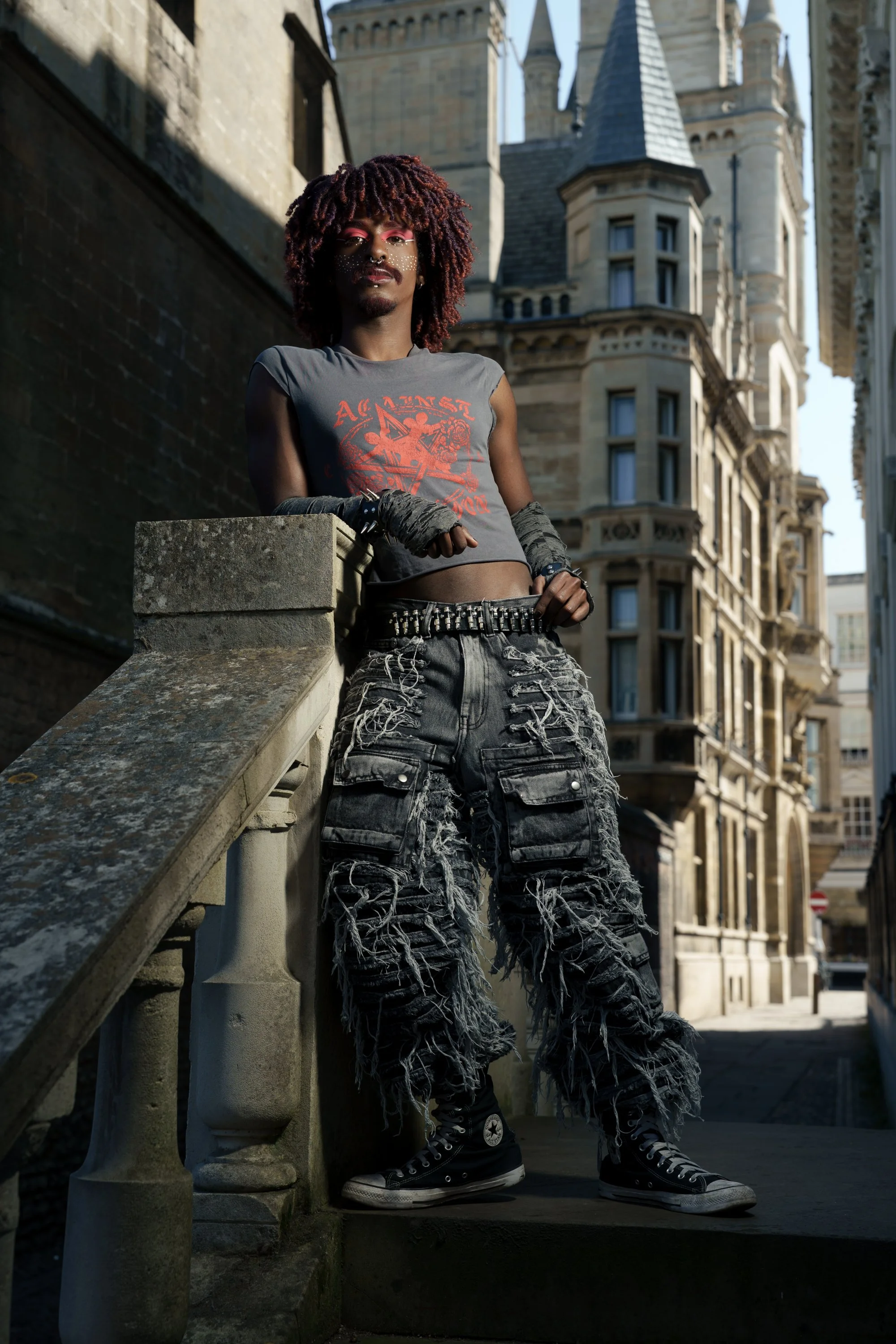
Guillotina: Photo by @luanaburtonph for @velvetmag
For Guillotina, on November 22, it was as an ordinary Saturday night. Hosting a friend and returning from an event at Junction, the pair decided to get food in town. Taco Bell was packed. “We walked into McDonald’s, I saw it was basically empty,” Guillotina recalls. “I said ‘ay yo!’ to my friend.”
What followed was immediate. “A guy looked up at me, turned to his friend, and dabbed him up saying, ‘What up my ni**a?’ The whole group started laughing.” Guillotina says they froze. “We just stopped walking. I felt this massive pit in my stomach. I asked my friend, ‘did you just hear that?’ My friend, who is white, looked at me in disbelief and said, ‘did he just call you that?’ As we were having this conversation, they all just ran away.”
Guillotina alleges the group were wearing ‘Cambridge University Lawn Tennis Society’* jackets. What shocked them most was how casual the abuse was. “He said it so comfortably, like it was a joke for the room. And yeah, his friends laughed as well.”
When Guillotina and their friend attempted to speak to others in the group, “they just put their hands up, saying ‘don’t speak to us’, ‘oh, I’m not involved’.” They say it was shocking how “the team could watch one of their members call someone a ni**a and just shrug it off: ‘yeah, whatever’, ‘we don't care - that’s not a problem for us’.”
Reflecting on the incident, Guillotina describes the aftermath as visceral. “It felt like I’d been verbally stabbed in the chest.” The next morning, they met a friend for brunch, a medic. “When I told her what happened, she basically said, ‘I’m not surprised - I’ve seen this happen at parties as well.’”
Guillotina later took to social media to speak publicly about the incident. Across three videos, the posts amassed over 200,000 views. They say the aim was not only to be heard, but to push for reparative justice. Guillotina reported the incident to the police, but was left waiting for a response. When they followed up, they say they were told: “I’m sensing some tension in your voice,” and that the case was not being investigated.
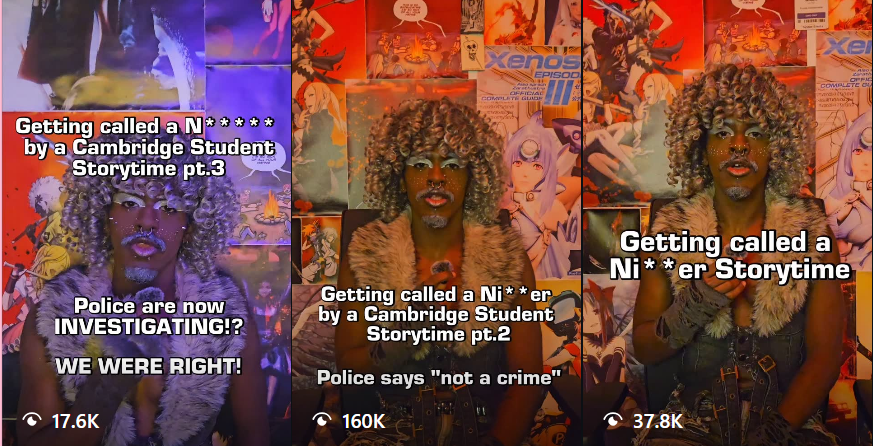
Only after growing media attention - including coverage by PinkNews - did the situation shift. In a recent reel, Guillotina says: “Now all of a sudden it is a crime worth investigating. So yeah, the police are now investigating this incident as a hate crime. There is a very small chance that we could see some justice in this case.”
Guillotina tells me the response has been monumental - “I had so many Cambridge students message me saying ‘thank you so much for speaking out’. If you look at the comments under the reel, its story after story”:
One comment reads: “I feel you. I’ve had similar difficulty and there is a shocking lack of consequences for the blatant racism here.”
Another writes: “I’m a Black person who grew up in Cambridge, and you’re so right about how much it sucks. Blackness is accepted as long as it’s not in people’s faces.”
Guillotina tells me “the fact I was made fun of in public like that, and I couldn’t go to another person to say ‘this just happened to me’, made me feel alone in the city.”
For them, the reactions of those surrounding the incident are as telling as the abuse itself. The laughter, the raised hands, the insistence of “I’m not involved” reflect a broader attitude within Cambridge: racism is seen, sometimes even acknowledged, but rarely treated as urgent or genuinely degrading.
“Queer people of colour don’t speak out because there are so few of us - the only reason I could is because I’m a drag performer and had the initial platform,” Guillotina says. “If this happened in London, everyone would agree that this was fucked. Not in Cambridge though.”
In this climate, those targeted by racism are often pushed to doubt their own experiences. Speaking out invites scrutiny of ‘tone’ rather than harm; anger is framed as excess, hurt as overreaction. The result is a quiet but pervasive silencing, where naming racism triggers more suspicion of the victim than the act itself, and where Black people are positioned as unreliable narrators of their own lives.
Now, with a police investigation underway and a swell of online support, that silence is beginning to fracture. Guillotina says the response has acted as a catalyst: “People have told me they’ve been through similar things and their white friends dismissed it, saying, ‘oh no, it’s not that deep.’” By speaking out, they add, “I’ve built a community of queer people of colour.”
Whether justice follows remains uncertain. But for the first time, the experience has moved from dismissal to recognition - no longer isolated, no longer easily brushed aside.
*The Cambridge University Lawn Tennis Society did not respond to requests for comment.