
Strawberry Fair is the Free Festival They Just Can’t Kill
Strawberry Fair is a living infrastructure, a free party rebuilt yearly by a shifting cast of volunteers, traders and organisers, its networks stretching far beyond the city.
Saturday June 6 will welcome its long awaited return.
Most students don't know that the Town moves to a different calendar. As they rush past venues, houseboats and pubs - preoccupied with ‘Easter’ term- they rarely think that others may be following a different rhythm. But peek behind the doors, and you’ll see a decades-old community of organisers - all facilitating a flurry of festivities set to crescendo in the summer: Strawberry Fair, the jewel of the season.
I walk into the Portland Arms, where I hear the Cambridge Band Competition in full swing. It’s a fundraiser held across many heats, where the winner is bestowed the honour of playing at the festival. I grab a pint, make my way into the beer garden, and sit with Mark McGivern - Band Competition judge and Strawberry Fair veteran. He’s seen the city change beneath his feet. He lights a cigarette. He knows many things.
Fundraisers like these run year-round, all building towards the first Saturday of June, when a free festival will splash colourfully onto Cambridge’s Midsummer Common.
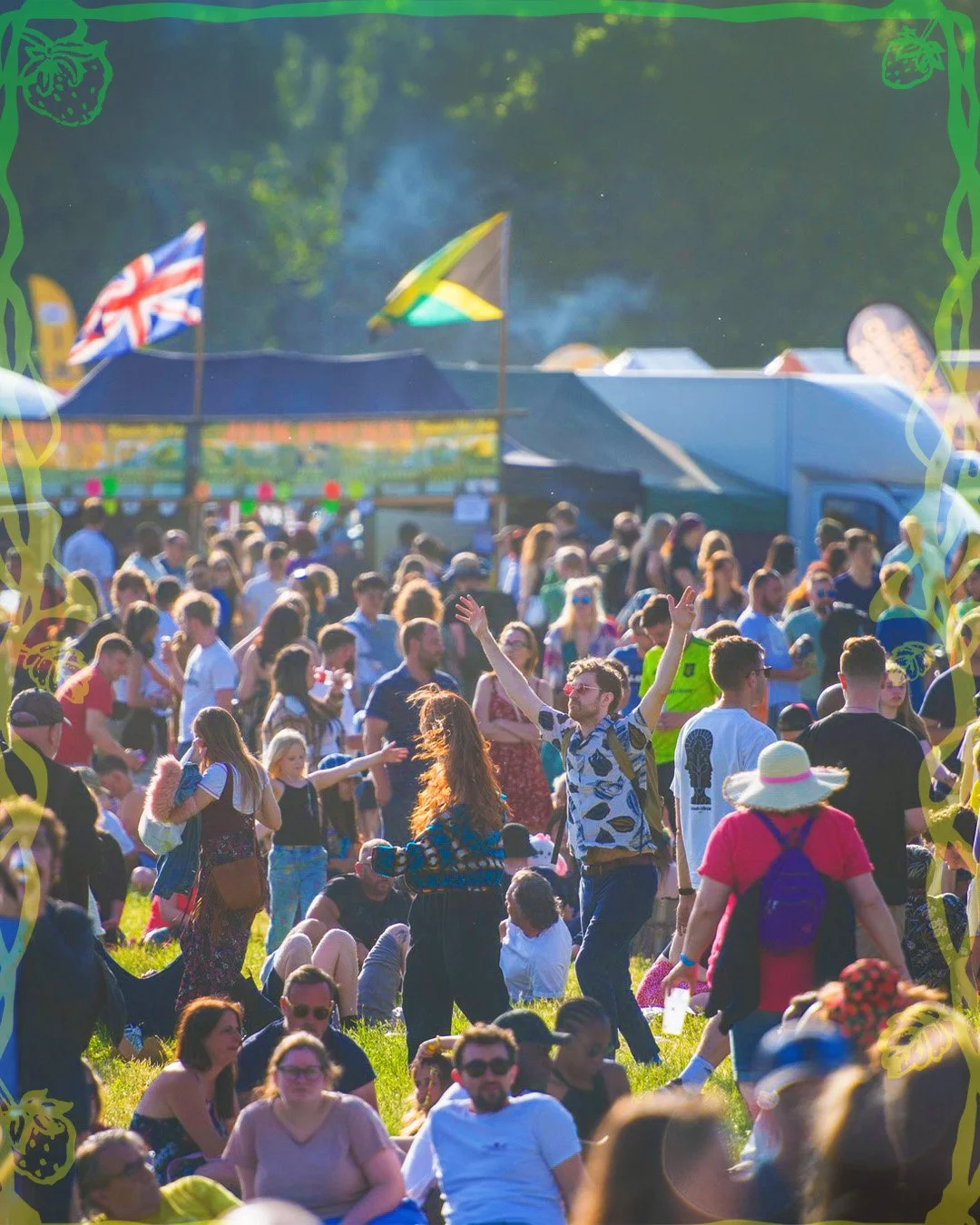
Revellers enjoying the sun, courtesy of Strawberry Fair
Wearing his signature scarf - a poet at heart - Mark speaks of the festival’s dynamism. It moves with the culture: organisers, acts and revellers coming and going. But to the old guard, there’s a throughline - whatever the era, it has always remained a space for counterculture and community.
He reaches further back to an echo from before his time. In the 70s, he says, it began as ‘a mixed group of students and town’ - something that now feels almost unlikely. Before setting off, I’d asked my housemates about the fair; none of them had heard of it.
It emerged from the ‘free parties on the common through the 60s into the 70s,’where students and locals from the hippie scene ‘got together and put on the first Strawberry Fair’. Mark tells me ‘they pulled together what they could,’ describing a postcard scene of Maypoles and can-can dancing. When the counterculture was acoustic, this festival of improvised frolicking was ‘publicised as a free May Ball for the city.’
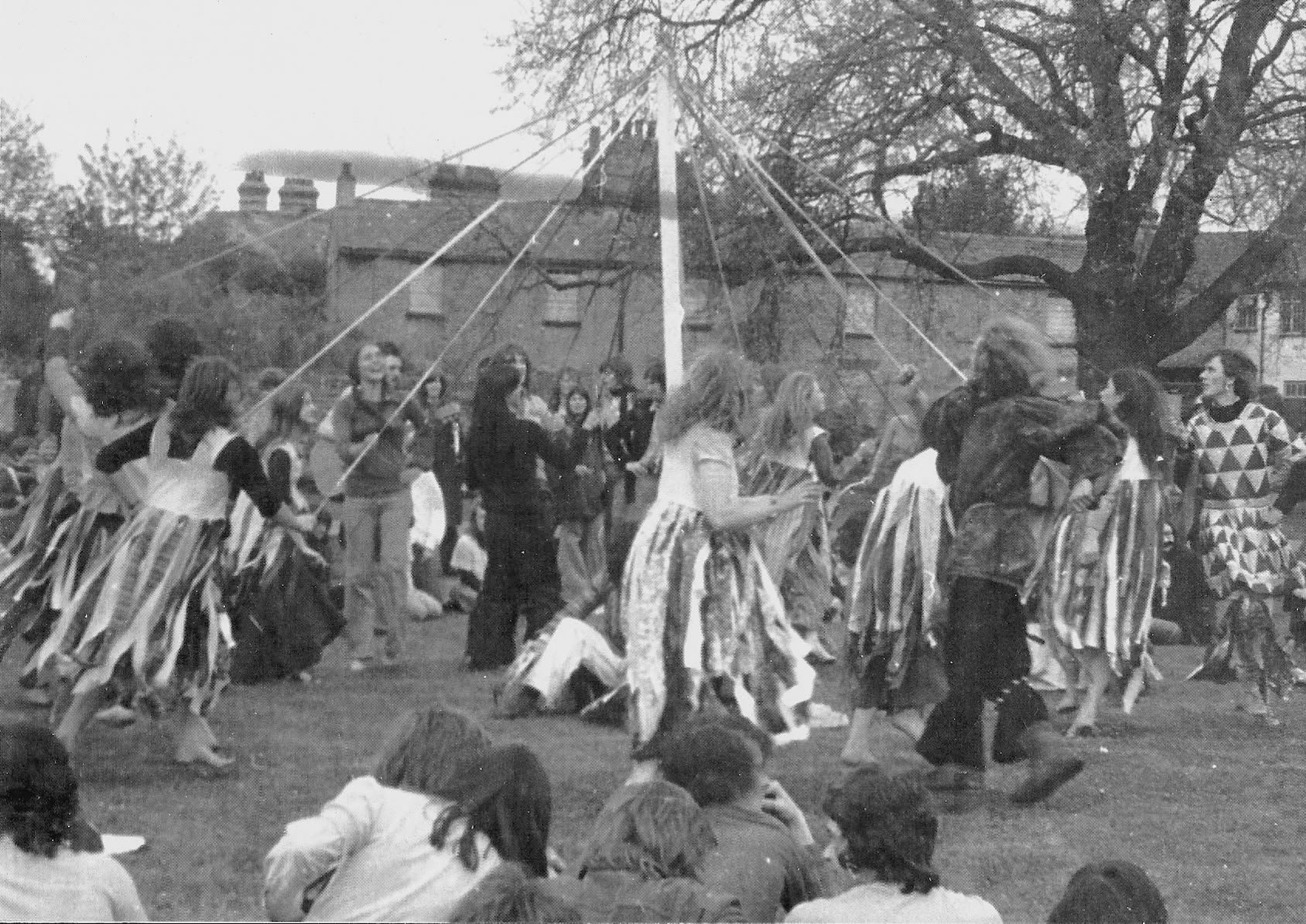
Vintage SF, courtesy of Strawberry Fair
A radical proposal sadly lost to time - but many other remnants are still here. Mark tells me about when ‘some of the original founders of Strawberry Fair came along and were interviewed by BBC.’ They said while it was completely different, there remained a recognisable glimmer: ‘it was still free for people to come to - still put on entirely by volunteers for effectively nothing.’
‘it was still free for people to come to - still put on entirely by volunteers for effectively nothing.’
Mark says that the founders said it ‘still had that vibe about it, of people doing what they can with what they can get.’ And they most certainly pull things together. Starting the day, the fair is inaugurated by a parade - people in costume, stilt walkers, banners and music - marching from the market to Midsummer Common. This tradition harks back to 1973, when the first looked like ‘a big procession through the city, carrying a giant Chinese-style dragon.’ Mark had to temper my excitement, telling me ‘the dragon’s long since disintegrated.’ But from its paper tendrils, a path was marked - one that revellers still dance along today.
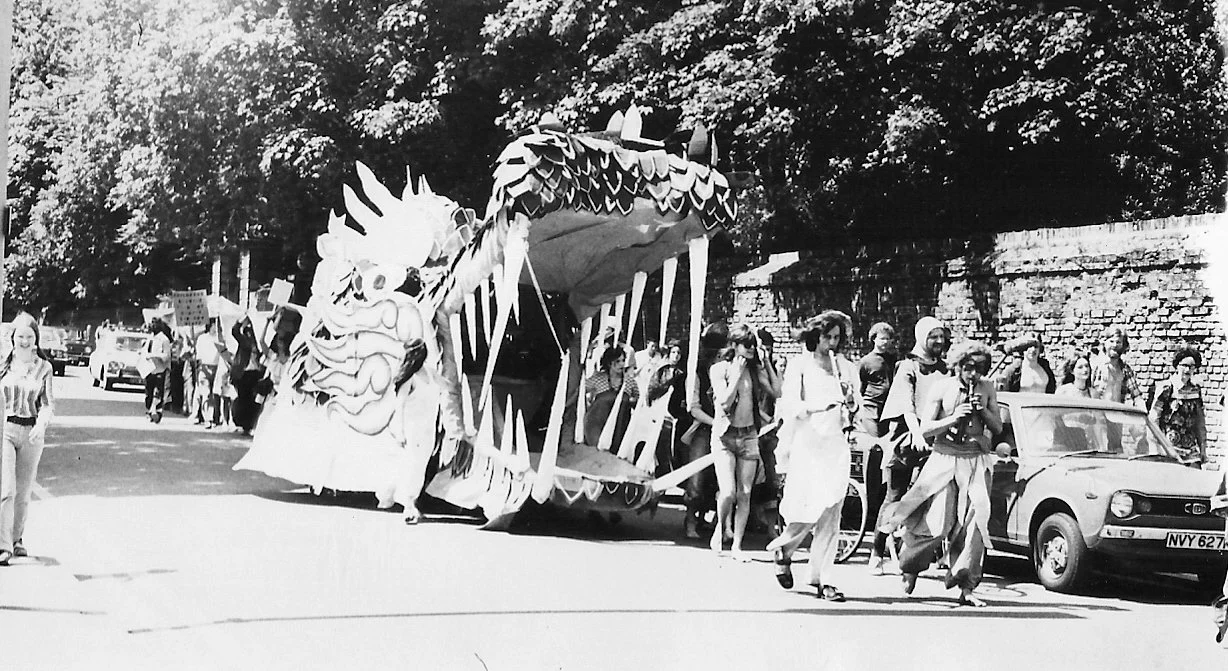
The original dragon, courtesy of Strawberry Fair
Moving with the flow of Britain’s party culture, the fair folded into the free festival scene of the late 70s: an era of spontaneity, when DIY festivals pushed against councils and police. At the same time, youth culture flourished. As the political climate hardened, the fair shifted with it - ‘more punky, more metal’: becoming, as Mark puts it, ‘probably its most politicised time - it was the Youth versus Thatcher.’
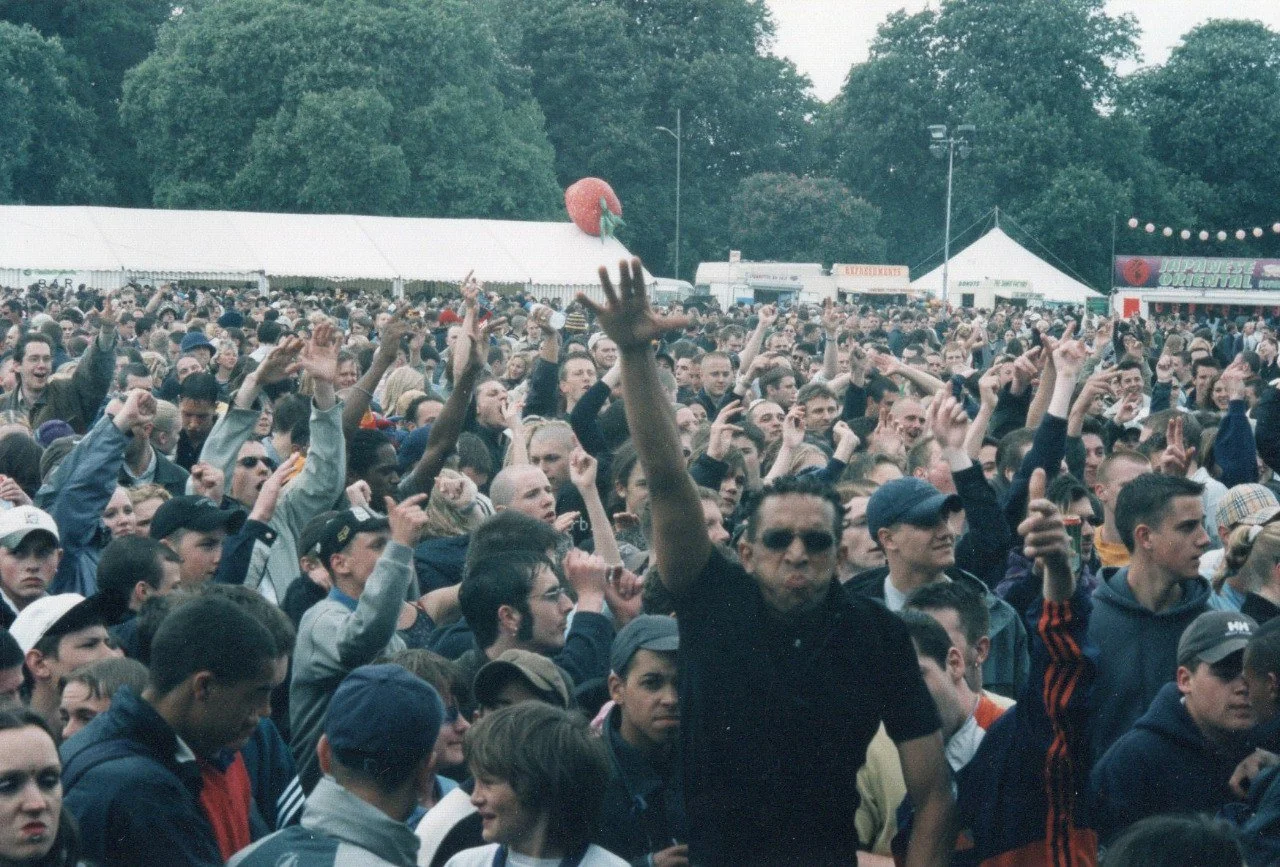
Vintage SF, courtesy of Strawberry Fair
Dancing into the 80s, ‘Strawberry Fair found itself the first of the festival season - closely followed by the Stonehenge Solstice Festival.’ The stalls, he recalls, were vibrant, with ‘more traders as people followed along’.
The festival and its organisers are just one node in a larger circuit: Mark tells me that ‘Strawberry Fair has been linked to parts of Glastonbury for decades.’ Within Cambridge, too, those overlaps run deep: ‘a number’ of the festival’s founders were also ‘members of the original Cambridge Junction committee.’ The connections, he smiles, ‘have always been there’.
‘Strawberry Fair has been linked to parts of Glastonbury for decades.’
They still are. As the festival moves with the times, so do its networks. In the modern day, Mark points out connections between organisers and ‘festivals like Small World and Equinox.’ Turning to this year’s wares - crystals, incense, jewellery and custom clothing - he says the vendors ‘make their living from taking their stalls’ across the country every summer. After the festival, they ‘start thinking about their pitches for Download and Glastonbury,’ or wherever comes next.
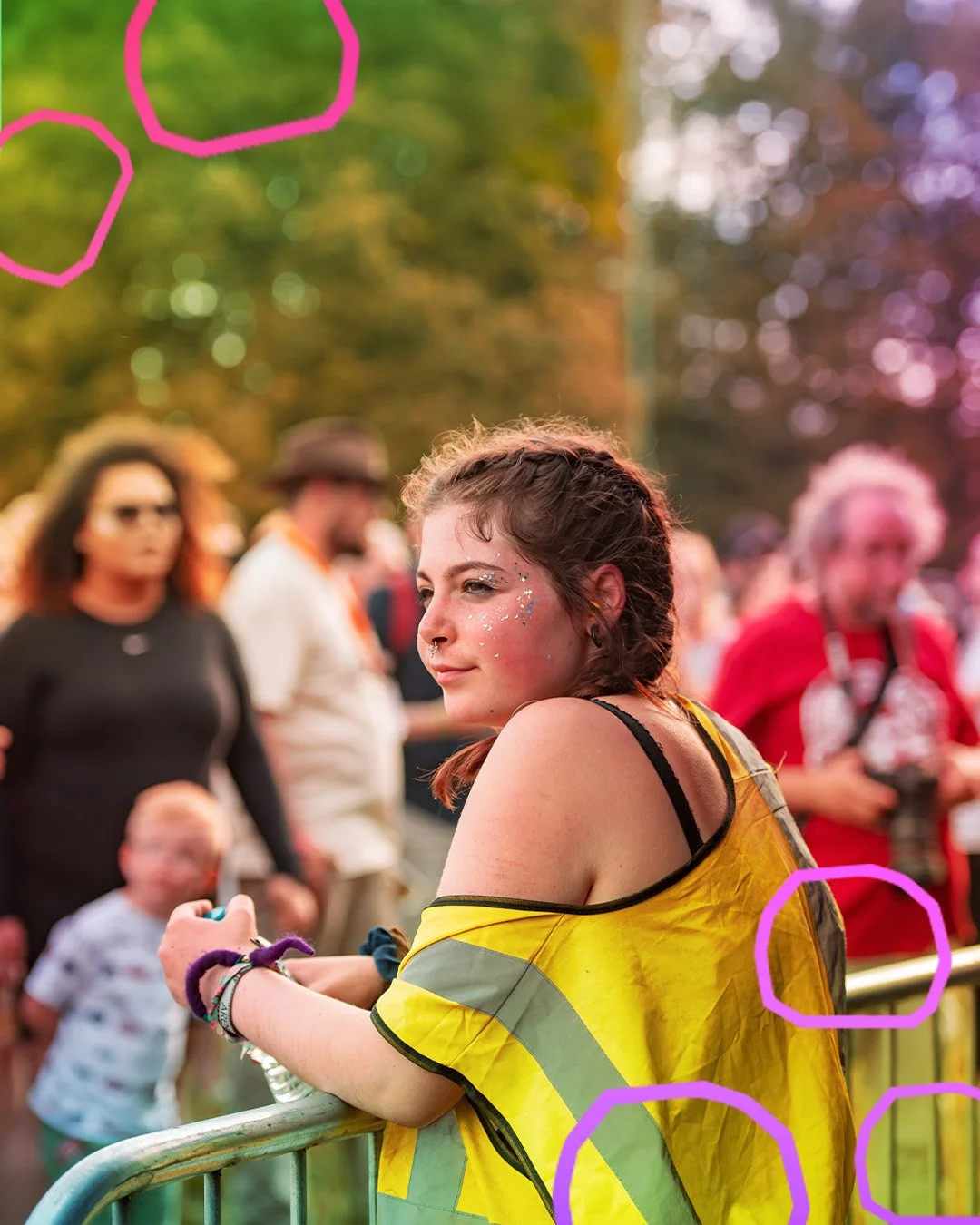
A bedazzled steward observes the crowd, courtesy of Strawberry Fair
The fair has weathered its share of threats. Through the 90s and 2000s, as the festival bloomed into electronic dance music, demands for Public Order had become an anxious media sensation. I see organisers grinning over at our table while Mark recalls 'Police public order vehicles behind the railings of Jesus College - all on that green.' He smirks remembering the college giving 'the strong impression of being very hostile.'
Then 2010: Cambridge police appealed the fair's licence after it had been granted, plunging organisers into unplannable uncertainty - and for the first time in its history, the fair didn't happen.
But this relationship with authority gradually softened: when the national Health and Safety Executive published its first guide to running outdoor events, 'Strawberry Fair was one of the contributors.'
Covid cancelled the fair until 2022, and it ran smoothly through to 2024 - until money problems arose. I see organisers frown as they overhear the topic. Rising costs meant 2025 would run to £205,000 - double what it cost a decade ago. Mark is characteristically direct: 'Anyone can go broke accidentally, but going broke deliberately is a much more serious thing.' They went back to the drawing board, re-strategised and found a way… The fair returns in 2026!
'Anyone can go broke accidentally, but going broke deliberately is a much more serious thing.'
I walk home from the pub across Midsummer Common, thinking about ‘The Build’ that Mark described with a kind of glee. A week before the fair, every structure is marked out on the ground. On Tuesday they ‘have fencing parties’, laying out the two-mile perimeter. By Wednesday, the stages begin to rise - ‘decor starts appearing’, people moving through the space with furniture, paintbrushes, whatever is to hand. There’s a sense of organised chaos: ‘people turn up on the Tuesday and then go back to Glastonbury to begin building there.’ ‘Anyone who wants to do a bit of art can take a paintbrush and go… do something with a bin.’ By Thursday, it shifts again - ‘heavy vehicles, the bars start appearing, traders set up their stalls.’ ‘And by halfway through Friday, it’s practically finished.’
It’s hard to picture how a ‘saucer-style’ UFO stage with a ‘16-metre frontage’ will come together - but somehow I trust it will. The skate park in this year’s new youth area, the stalls built by a team of volunteer carpenters: each part feels improbable until you see the system underneath it. The acts are paid close to nothing, the organisers volunteer their time, and the event remains unticketed.
It doesn’t happen because it is fully resourced or neatly planned. It happens because enough people, every year, decide that it should.
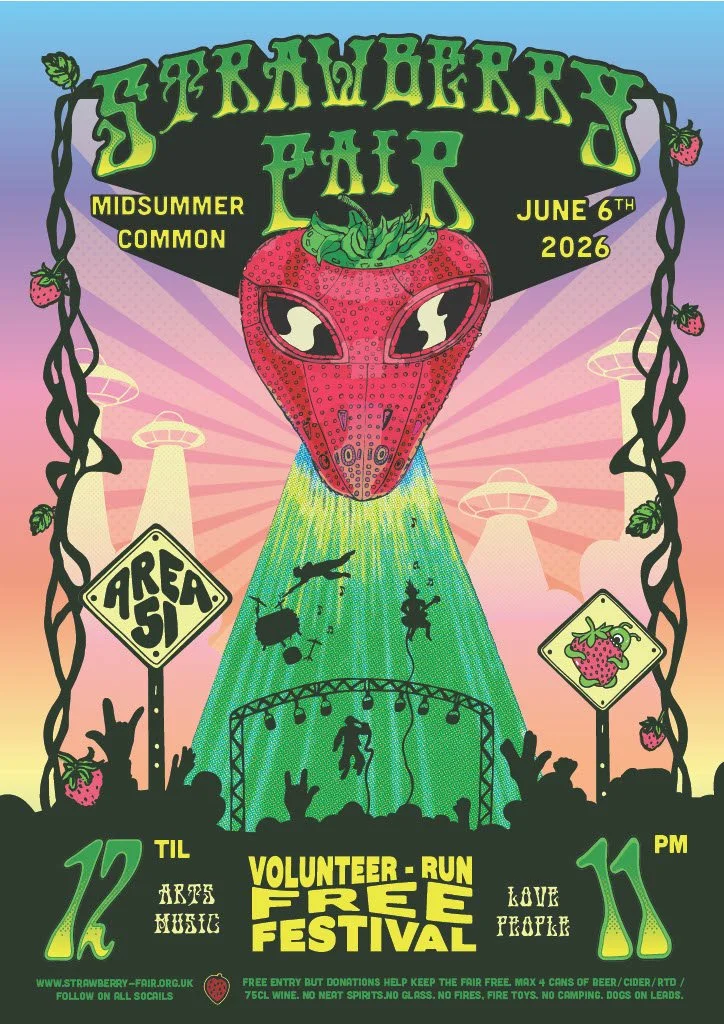
Strawberry Fair will be raging on Midsummer Common on June 6. Find out more about the festival here